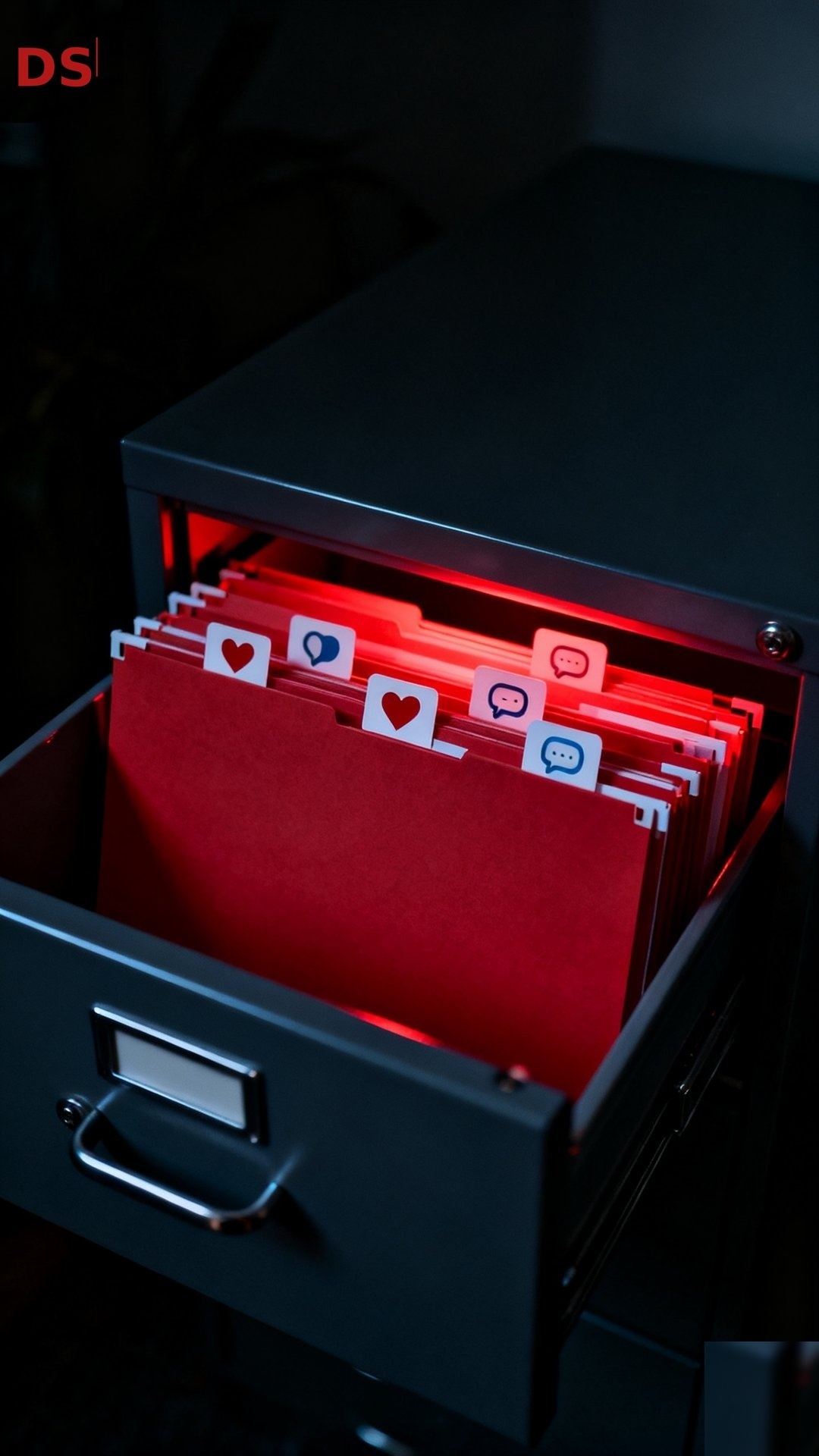
You swiped right. Shared some photos. Filled out a bio, connected your Instagram, turned on location. It felt harmless. That is the point.
Behind every profile is a data pipeline. Dating apps are among the worst offenders in the consumer app space for what they collect, how long they keep it, and who they sell it to.
What They Collect
The obvious: name, age, gender, orientation, photos, GPS location, email, phone, bio, employer, school. You know about this part.
The rest:
Behavioral data. Every swipe, message, app open. How long you look at a profile. What time you are active. One journalist requested her Tinder data and received an 800-page report — age preferences, word frequency analysis, and a complete behavioral log.
Device data. Phone model, OS, IP address, mobile advertising ID. Lets advertisers track you across every app on your phone.
Facial geometry. Tinder stores it during identity verification. Bumble retains biometric data for up to three years.
Third-party connections. Linked Instagram, Spotify, or Facebook? The dating app now bridges to those data sets. Social graph, music taste, photo history — all connected.
Who Buys It
Data brokers. Grindr sold precise user location data to ad networks from 2017 to 2020. OkCupid shared sexuality, drug use, and political views with an analytics company. Match Group — Tinder, Hinge, OkCupid, PlentyOfFish, Match.com — can share data across its entire portfolio.
Religious organizations. A Catholic group in Colorado spent millions purchasing data from Grindr, Scruff, Growlr, Jack’d, and OkCupid. They cross-referenced location data with church residences to identify and out gay priests.
Government agencies. The U.S. military purchased location data from Muslim Mingle through the broker X-Mode. DHS, ICE, CBP, and the IRS have all used commercially purchased location databases — bypassing warrant requirements.
Anyone with a scraper. A programmer scraped 40,000 Tinder photos to build a facial recognition dataset. Danish researchers publicly released 70,000 OkCupid profiles including location and sexual preferences. When asked about anonymization, one researcher said the data was already public.
Your Photos Do Not Stay on the App
Profile photos get scraped and fed into facial recognition databases. Once indexed by PimEyes or Clearview AI, a single dating photo becomes the key that unlocks your real name, employer, home address, and social media — even if your dating profile uses a nickname.
Deleting Does Not Mean Deleted
Uninstalling the app does nothing. Your account and data remain on company servers. Even the in-app deletion process often retains data for "legitimate interests" — a phrase that means whatever they want it to mean. Mozilla found that 52% of dating apps failed minimum security standards. 52% had a breach in the past three years.
What to Do
1. Delete dormant accounts properly. Log in. Submit a data deletion request. Wait for confirmation. Then delete through the app’s official process.
2. Submit formal deletion requests. If your state has a privacy law, cite it. Match Group: privacy@match.com. Bumble: DPO@bumble.com. Grindr: privacy@grindr.com.
3. Disable ad tracking. iPhone: Settings > Privacy > Tracking > off. Android 12+: Settings > Privacy > Ads > Delete advertising ID. This single toggle kills one of the largest data-sharing vectors.
4. Disconnect linked accounts. Remove Instagram, Spotify, and Facebook connections. Each link expands the data surface exponentially.
5. Minimize your profile. Remove employer, school, and identifying information. Use photos that do not appear anywhere else online.
6. Use approximate location. Six of the top fifteen dating apps leak GPS data precise enough to calculate your exact address through trilateration.
What It Comes Down To
Dating apps collect more intimate data than almost any other consumer app. They sell it to brokers, advertisers, and government agencies. They retain it after you delete your account. And the photos you upload become searchable in facial recognition databases you never consented to.
At the end of the day, the data you gave a dating app does not belong to the relationship you were hoping to find. It belongs to an advertising pipeline that will outlast every match you ever make.
— J. Daniel, Dark Scrub